Lemon Balm Healing Salve
Published: September 25, 2026
My lemon balm is thriving so I have started exploring the diverse uses for this citrusy herb.
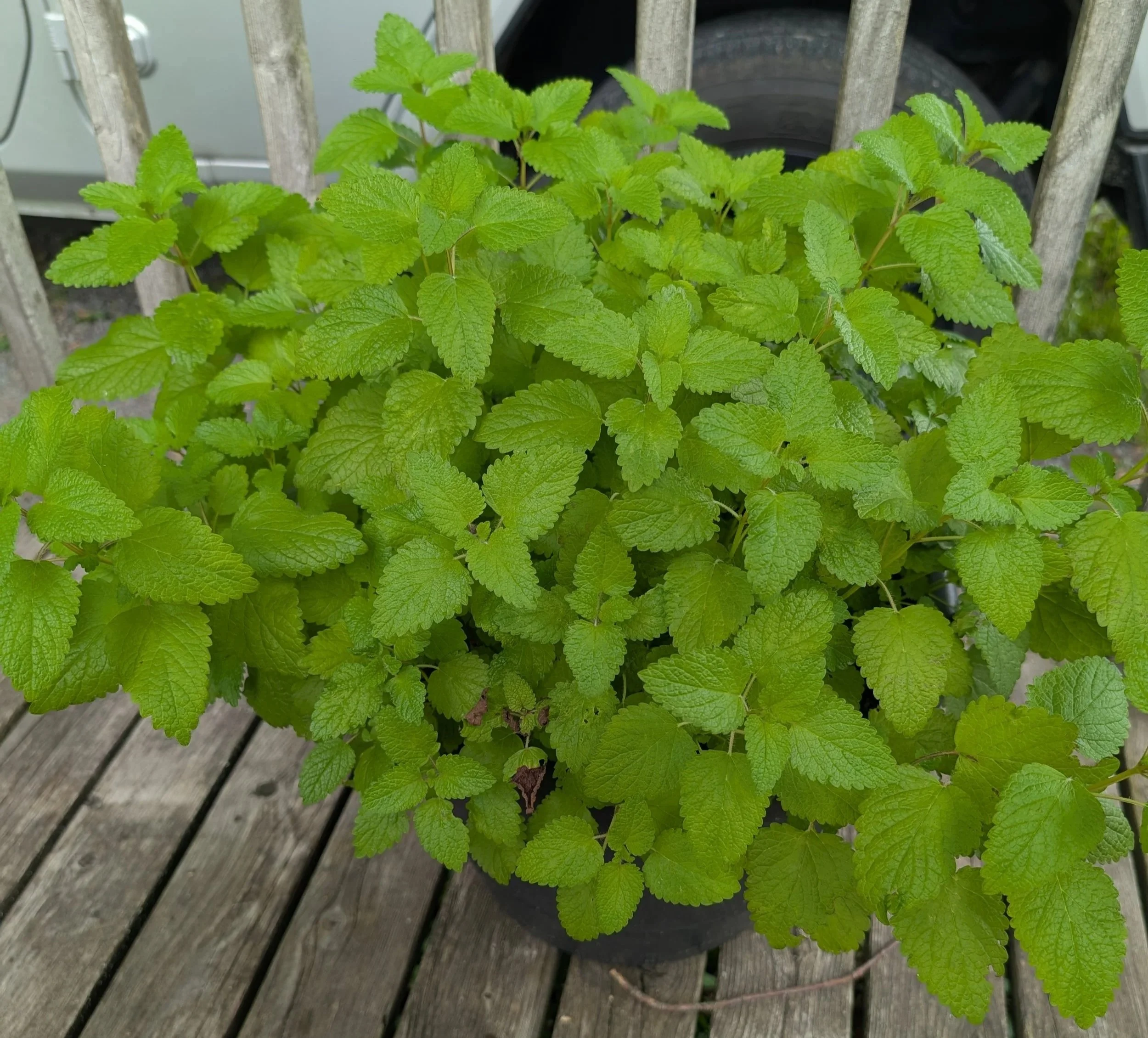
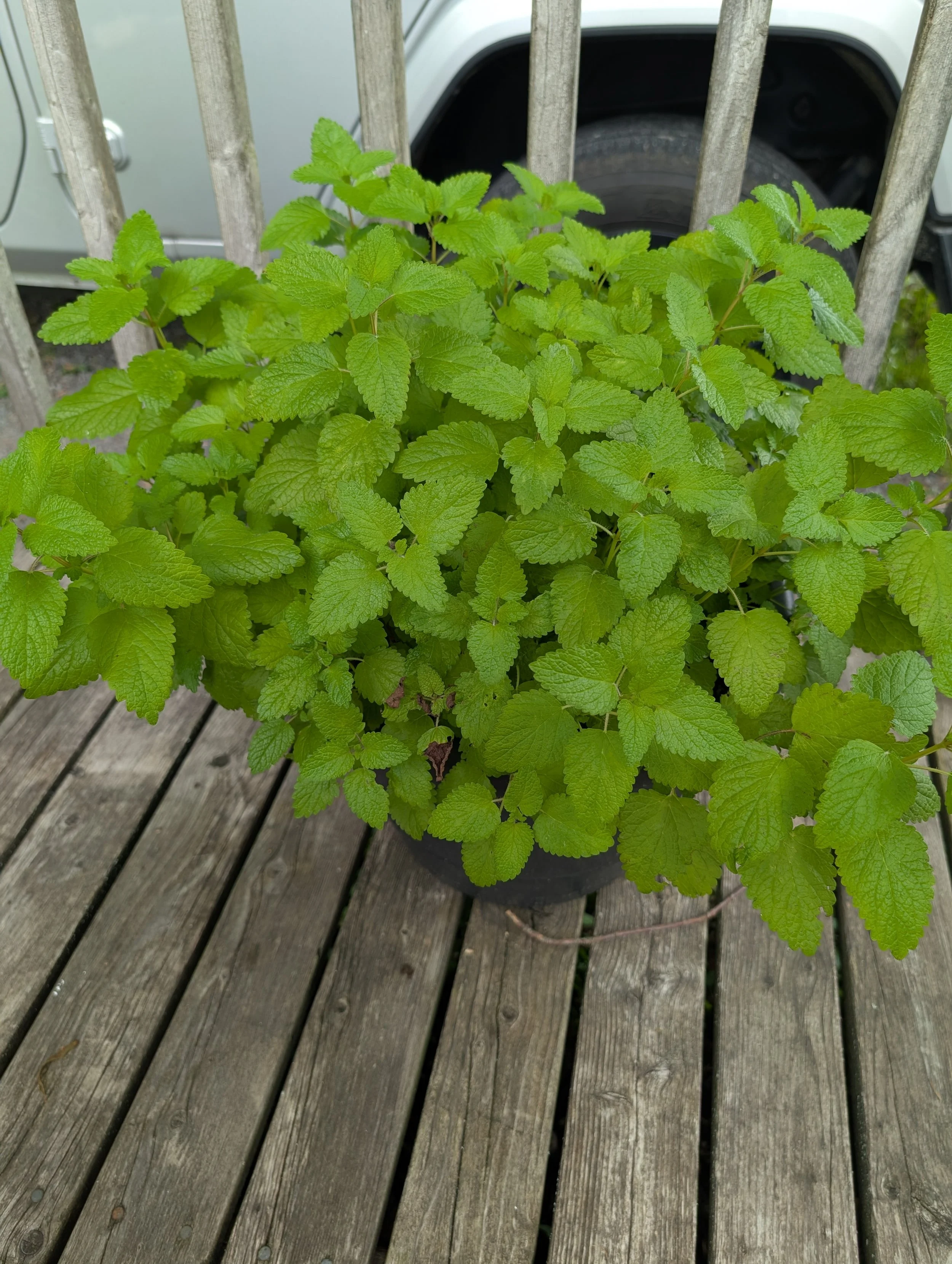
My potted lemon balm plant
What is Lemon Balm
Lemon Balm is of the mint variety of plants and is native to Europe, North Africa, and West Asia but grown worldwide. (Enter me in Nova Scotia)
This herb is a perennial and can survive our winters, at this time though my lemon balm is potted and will come in over the winter.
Health Benefits
Lemon balm is rumored to relieve symptoms of stress and help you relax. Although there’s no definitive proof of this, it may promote feelings of calmness in people. Compounds in lemon balm may also have a relaxing or sedative effect.
As a salve, lemon balm can be used to help cold sores, bug bites and other skin issues.
While there’s still more research to be done, it’s clear there’s some benefits to using or consuming lemon balm.
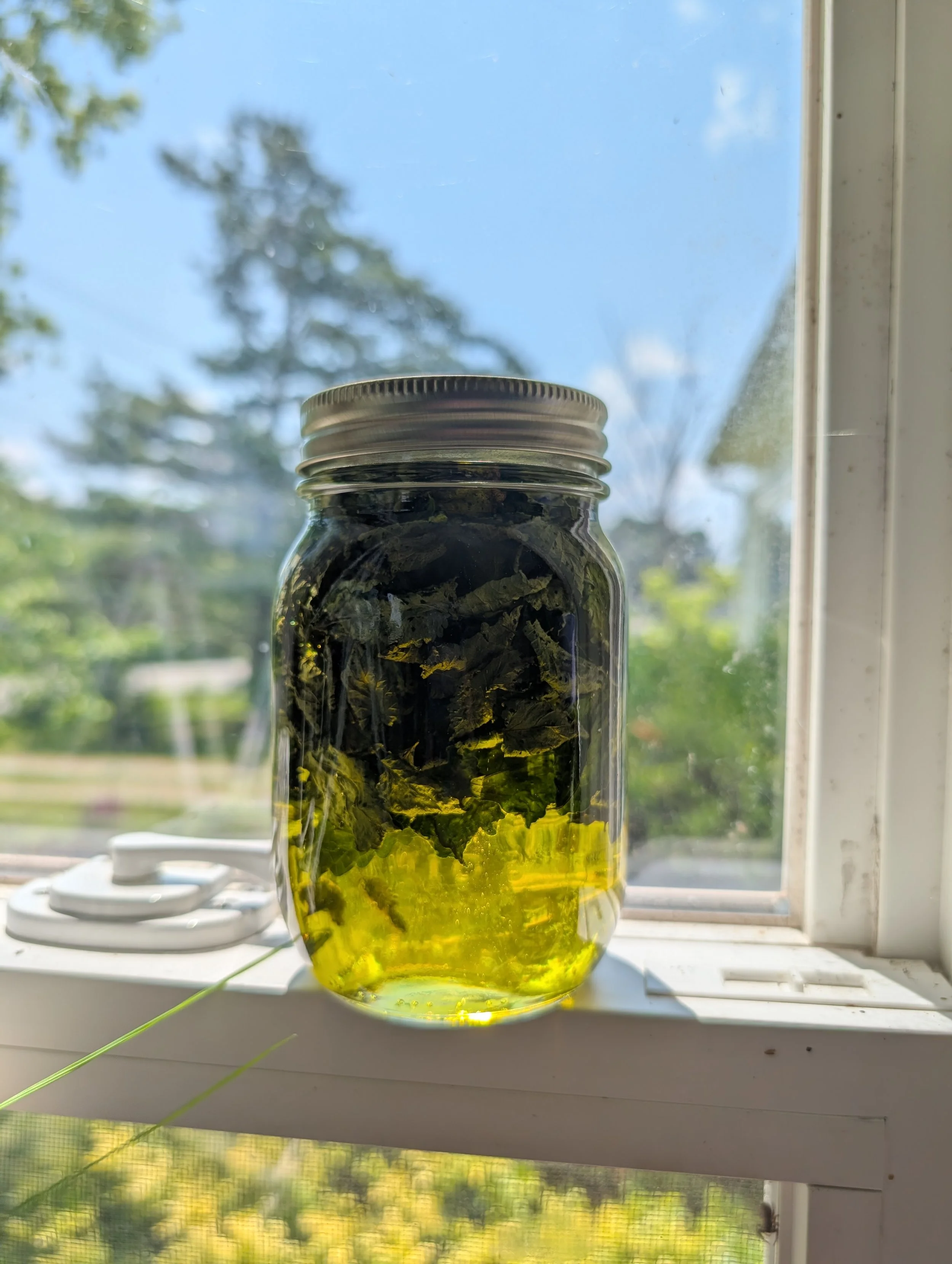
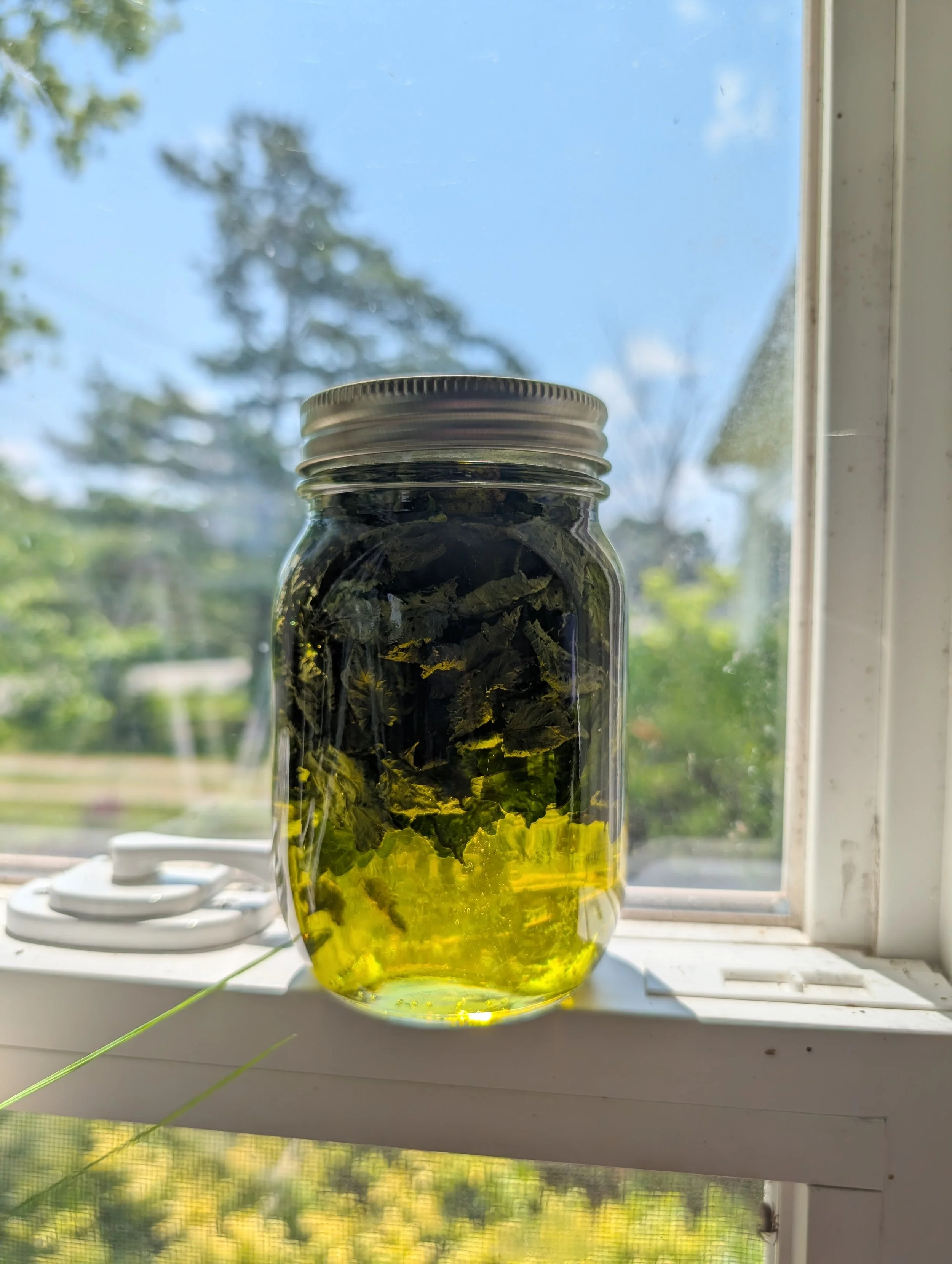
The lemon balm infused oil hanging out on my windowsill
Lemon Balm Healing Salve
My first adventure was to make a lemon balm salve. I seem to have a scent to me that mosquitos can smell from miles away (literally) and I act almost like bug light for the other people around me as they hone in on me and ignore the others around me.
Despite my efforts to deter them with bug sprays and clothing I always end up with numerous bug bites which turn to scabs (I have a vague theory I’m allergic to these bites) so I’m always on the lookout for products that can reduce the itch and help my skin heal. Enter this lemon balm salve.
I scoured the internet to find an easy method to try using ingredients that would be locally accessible and I’m really happy with how it turned out.
Step 1- Dry the herbs
The first step was to dry a cup of lemon balm leaves. Lemon balm leaves are sensitive to heat (I’ve burnt them drying in the oven) so I opted to dry them using my dehydrator this time.
Set dehydrator to 35–40°C (95–105°F).
Spread the leaves in a single layer so air can circulate.
Check them after 2–4 hours, though it may take a bit longer depending on how full the trays are and how humid the leaves were when harvested. They are ready when they can be crunched up in your hand.
Step 2- infuse the oil
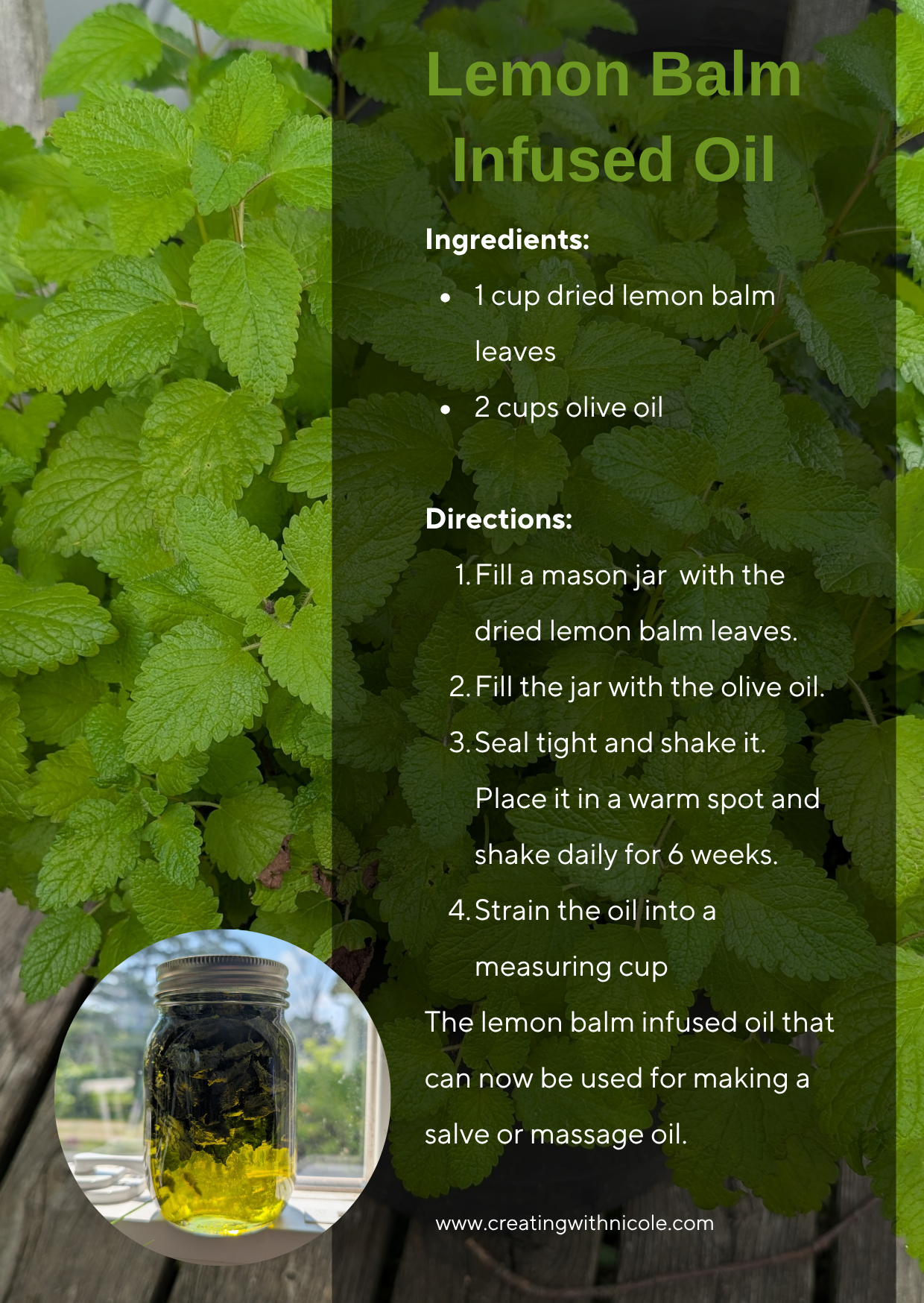
Step two was to make an infused lemon balm oil. This is the longest part of the process as the infusion time is 6 weeks.
1 cup dried lemon balm leaves
2 cups olive oil (you can also use almond or avocado oil)
Fill a 500ml mason jar half full with the dried lemon balm leaves.
Fill the jar with the olive oil.
Seal tight and shake it. Place it in a warm spot (I close a windowsill in my sunroom).
Shake the jar daily. Keep it warm and allow it to infuse for 6 weeks.
~6 weeks later
Strain the oil from the lemon balm with layers of cheesecloth into a 1L measuring cup
The lemon balm infused oil that can now be used for making a salve. It can also be used as a massage oil for skin problems.
Measure out the amount you will need for the salve, then transfer the remaining into a cleaned mason jar for storage.
Step 3- Making the Salve
½ cup of the lemon balm infused oil
⅛ cup Beeswax pellets
10 drops of lavender or citrus essential oil (optional)
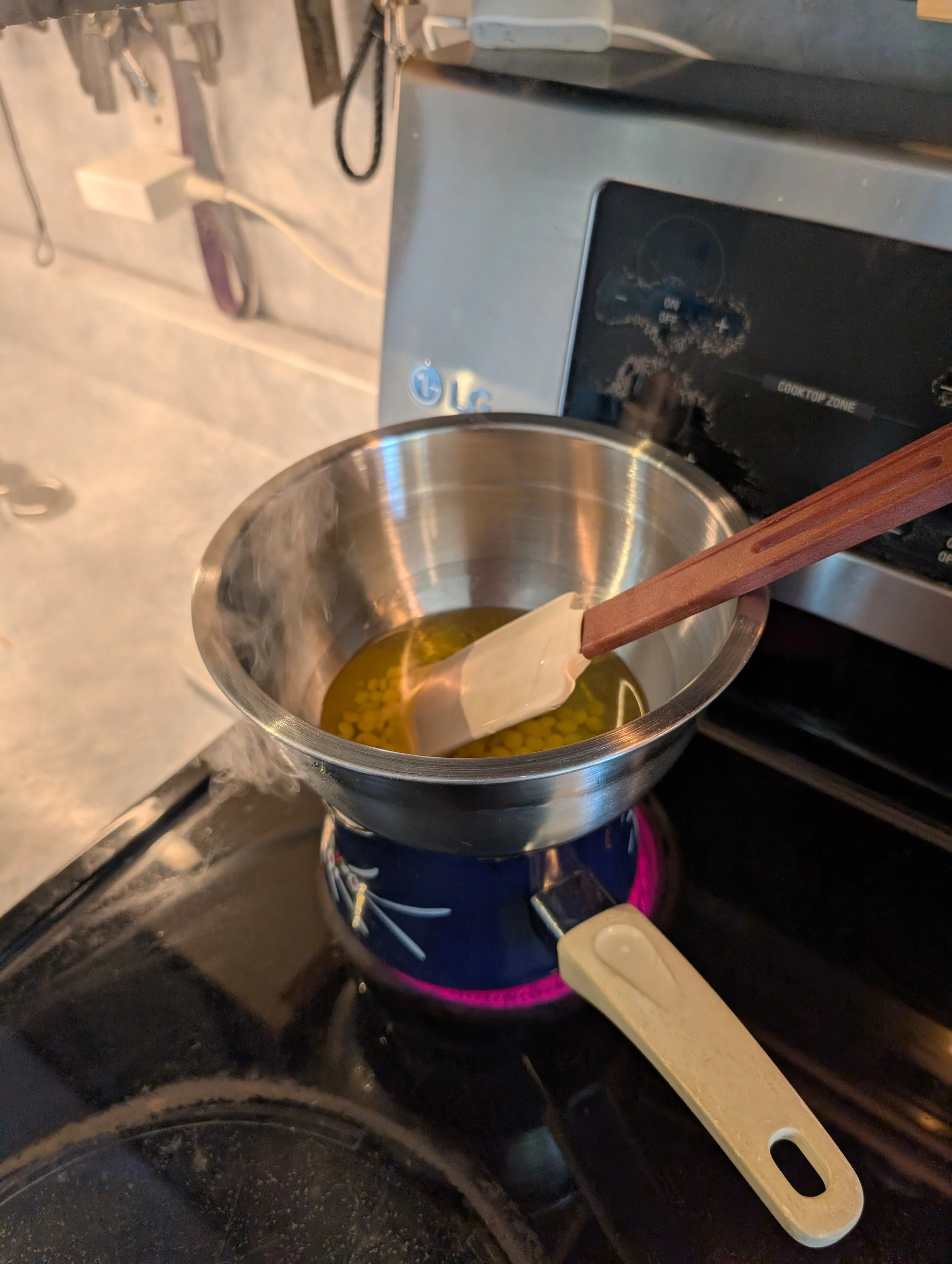
Over a double boiler, heat and melt the beeswax along with the oil. Stirring occasionally.
While the wax and oil are melting, prepare 6 2-oz jars or enough tins to distribute 12oz of liquid.
When the wax is fully melted, add the essential oil if using.
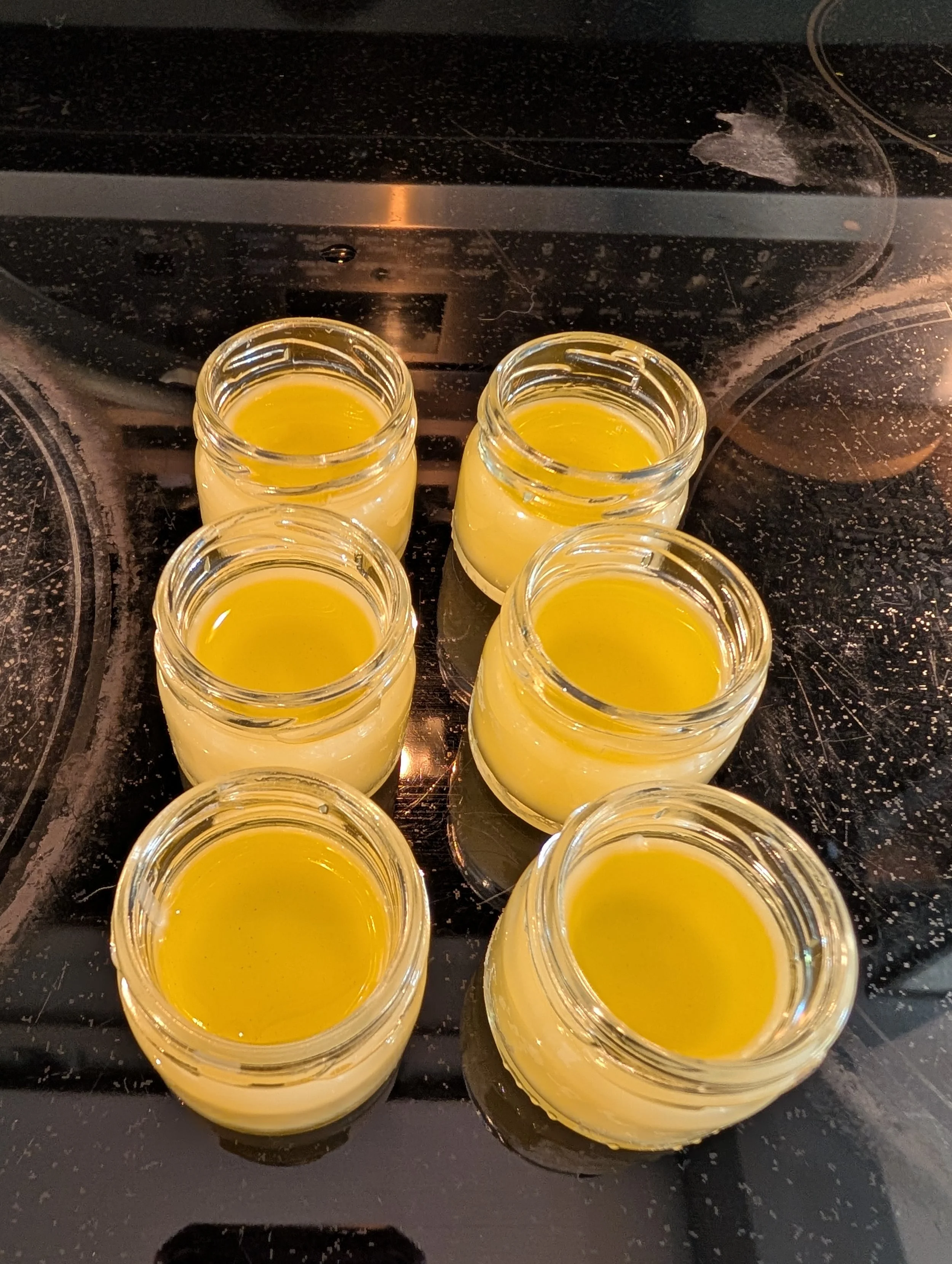
Pour into the jars and let cool before sealing with lids. Store in a cool dark place for up to 6 months.